
Thinning eyebrows may not just be a matter of age; it is often a combination of hormonal, nutritional, inflammatory and mechanical factors.
When we notice that our eyebrows are thinning, most of us say to ourselves:
"It's the age."
However, age is only one of many causes.
Thinning eyebrows can be the first manifestation of hormonal changes, lack of nutrients, chronic inflammation or some skin or systemic diseases.
That is why we should not only ask:
"How to promote eyebrow growth?"
But above all:
"Why are the eyebrows thin?"
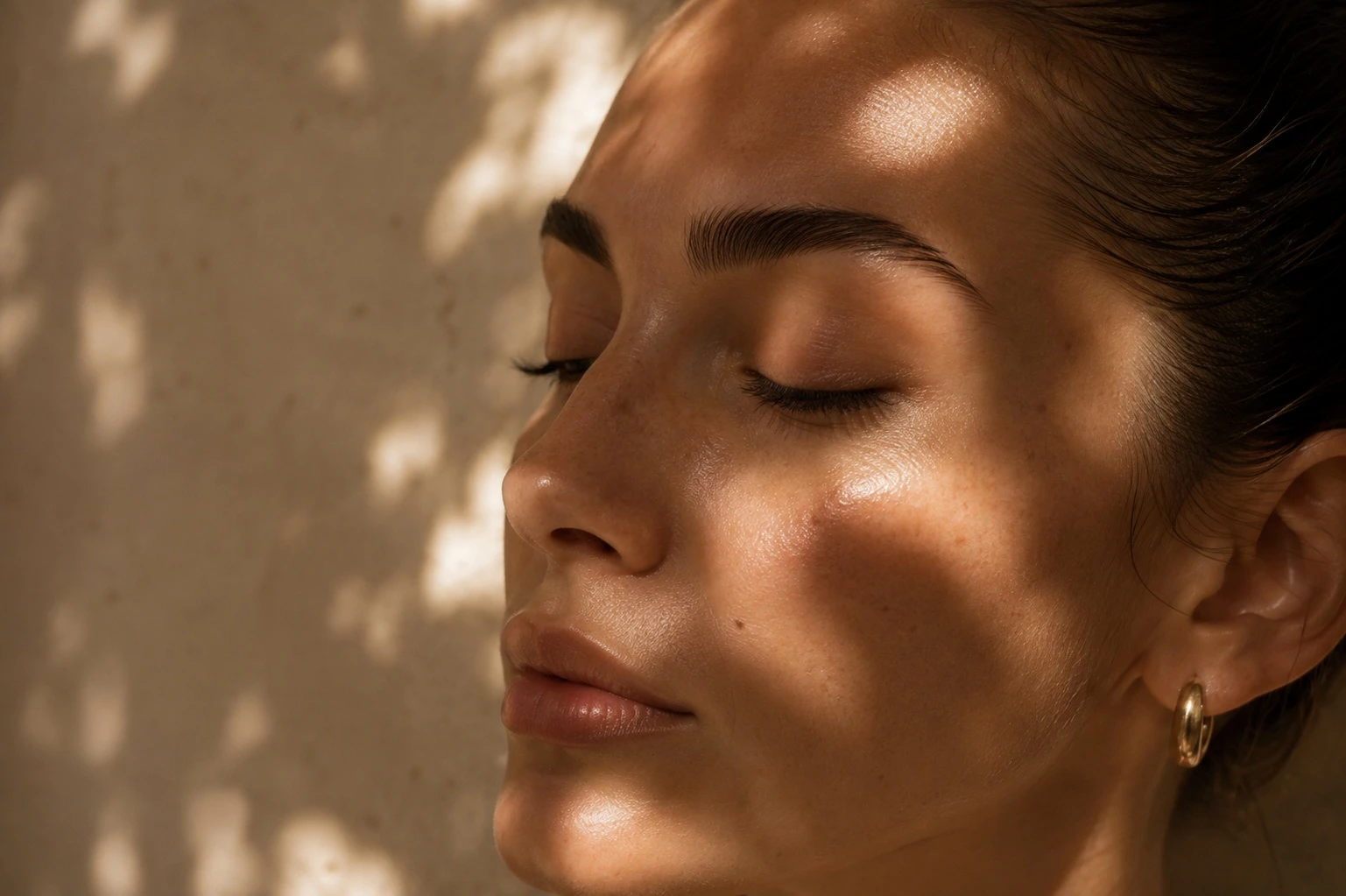
01 Eyebrows are a sensitive indicator of health
Hair follicles in the eyebrow area are among the most sensitive structures.
They react to hormonal changes, inflammatory processes, lack of nutrients and long-term stress.
Therefore, thinning eyebrows can be one of the first signals that something is changing in the body.
It does not automatically mean a disease.
However, it is a reason to search for the cause.
02 Hormonal changes
One of the most common causes of thinning eyebrows is hormonal changes. During menopause, there is a decrease in estrogens, which affect the quality of the skin, microcirculation and the growth cycle of hair follicles.
The result can be:
- thinning eyebrows,
- finer hairs,
- slower growth.
Similar changes can also appear after pregnancy or with hormonal imbalance.
In modern trichology, it is not the case that every thinning eyebrow needs the same treatment. It needs proper diagnosis and an individual approach.
03 Diseases of the thyroid gland
Disorders of thyroid gland function are among the classic causes of thinning eyebrows.
Especially with hypothyroidism, there may be a gradual loss of hair in the outer third of the eyebrows.
That's why we always think about this possibility in case of sudden or significant thinning of the eyebrows.
04 Chronic stress
Stress does not only affect the psyche.
A long-term increase in stress hormones can disrupt the growth cycle of hair follicles and promote their premature transition into the resting phase.
The result is increased hair loss.
05 Iron deficiency
Iron is one of the most important minerals for the proper functioning of the hair follicle.
Its deficiency can lead to:
- thinning hair,
- thinning eyebrows,
- slowing down the growth of new hairs.
It is most often encountered in women with heavy menstruation or after childbirth.
06 Zinc and vitamin D
The proper function of hair follicles also depends on a sufficient supply of micronutrients.
Lack of zinc or vitamin D can negatively affect the hair growth cycle and its quality.
However, supplementation alone is not a universal solution.
It is only relevant in the case of a confirmed deficit.
07 Skin diseases
Some dermatological diseases can damage the hair follicles directly.
These include, for example:
- atopic eczema,
- seborrheic dermatitis,
- psoriasis,
- chronic skin inflammations. If the inflammation persists for a long time, it can negatively affect the environment in which the hair follicle functions.
08 Alopecia areata
One of the possible causes is alopecia areata - an autoimmune disease in which the immune system attacks the hair follicles.
Thinning is often sudden and can affect not only hair, but also eyebrows or eyelashes.
In such a case, a dermatological examination and targeted treatment are important.
09 The cause is not always medical
Thinning eyebrows can also cause long-term mechanical damage.
The most common are:
- repeated plucking,
- aggressive cosmetic procedures,
- inappropriate care,
- frequent chemical treatments.
Long-term damage may weaken or permanently damage some hair follicles.
10 Why is it important to know the cause?
Two women can outwardly have the same problem.
Both have thin eyebrows. One needs to adjust the hormonal treatment.
The second replenish iron.
The third to treat chronic inflammation of the skin.
And the fourth can be a suitable candidate for regenerative treatments.
Therefore, there is no one universal solution.
Successful treatment always begins with a correct diagnosis.
11 How we approach eyebrow thinning at SOUMEÉ
At SOUMEÉ, we do not see eyebrow thinning as just an aesthetic problem.
It is a signal that deserves to be understood.
During the consultation, we evaluate:
- nature of thinning,
- skin quality,
- condition of hair follicles,
- possible hormonal or systemic causes,
- lifestyle and previous care.
Only then do we propose an individual treatment plan.
Because the goal is not only to create thicker eyebrows.
The goal is to understand why it has lost its natural quality.
12 Conclusion
Thinning eyebrows is not a diagnosis.
It's a symptom. It can be a natural part of aging, but it can also be a sign of hormonal changes, nutrient deficiencies, chronic inflammation, or other disease.
That is why it makes sense to look for the cause before we start looking for a solution.
In modern trichology, it is not the case that every thinning eyebrow needs the same treatment.
It needs proper diagnosis and an individual approach.